The Dark Sun
BEHMEN frequently uses the word TINCTURE. His definition of it is that it gives luster to metals, and color and fragrance to flowers. It is the Life. — J.K., editor's note, Splendor Solis (1920 translation)
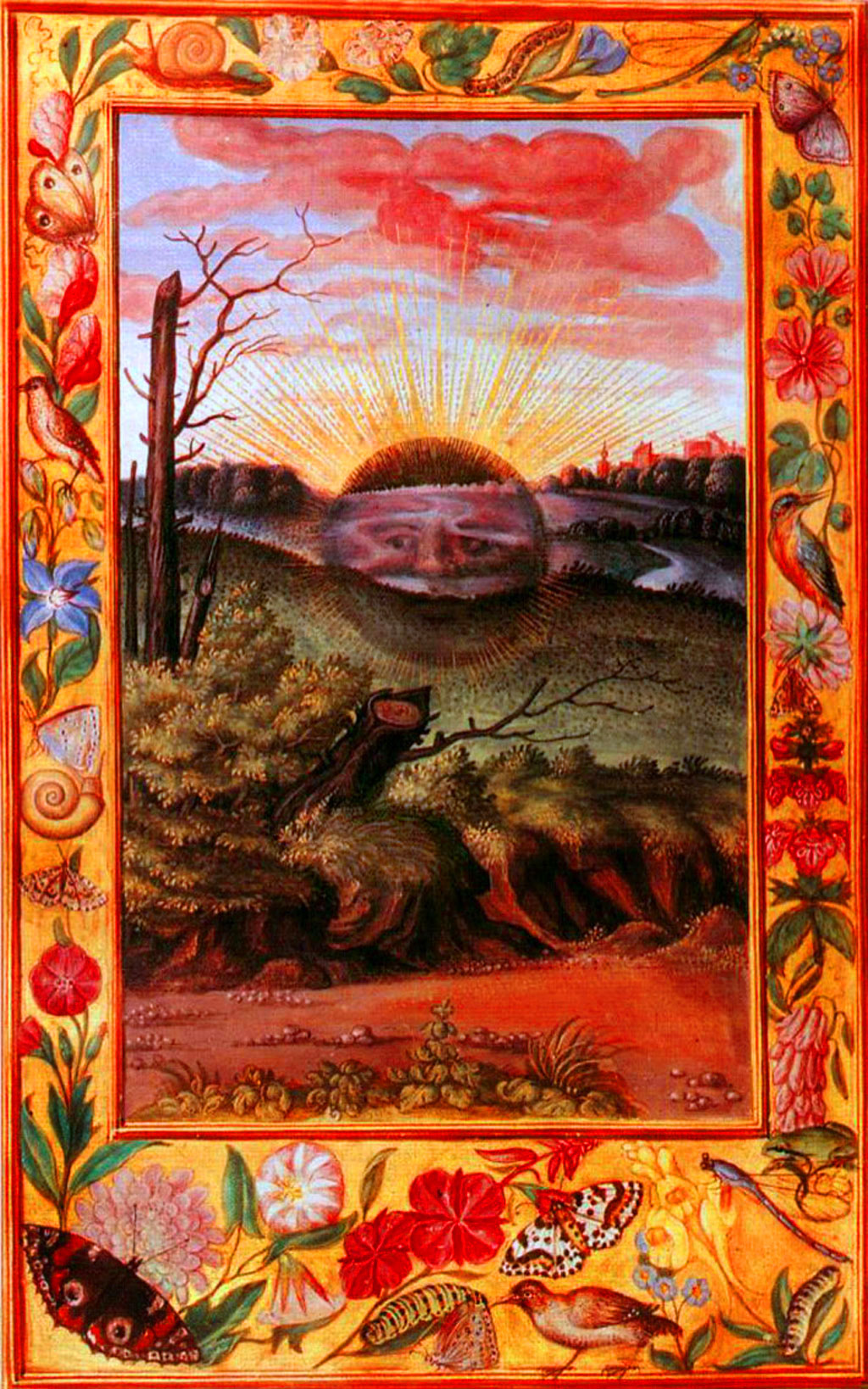
Half sunk below the ground... overspreads and hides totally the body of the true sun, which lies beyond; for, behind — is to be seen golden radiation of the true sun.
Plate 19 of the Splendor Solis. The nigredo — the blackening, the stage the alchemists feared and desired in equal measure.
The sun has a human face and it looks tired. The landscape below is still dark. A dead tree stands in the foreground like a man who has been waiting so long he forgot what he was waiting for. The buildings on the horizon are asleep. The light is arriving. Nobody is awake to see it.
The editor of the 1920 translation broke character at this plate. After pages of measured scholarly commentary, he wrote: “PREGNANT WITH THE DEEPEST MYSTERY that can be known to man here or hereafter.” The capitals are his. The awe is his. The restraint he maintained for every other plate cracked here.
Flamel said the same thing differently: the blackness at the beginning is the only sign the work is proceeding correctly. Without it, everything fails. He compared it to the black sail on the ship of Theseus — the sail that made the father throw himself from the cliff because he believed his son was dead. The father read the black as defeat. The son knew it was victory.
This was painted in 1582 to illustrate the stage of the work where everything goes black.