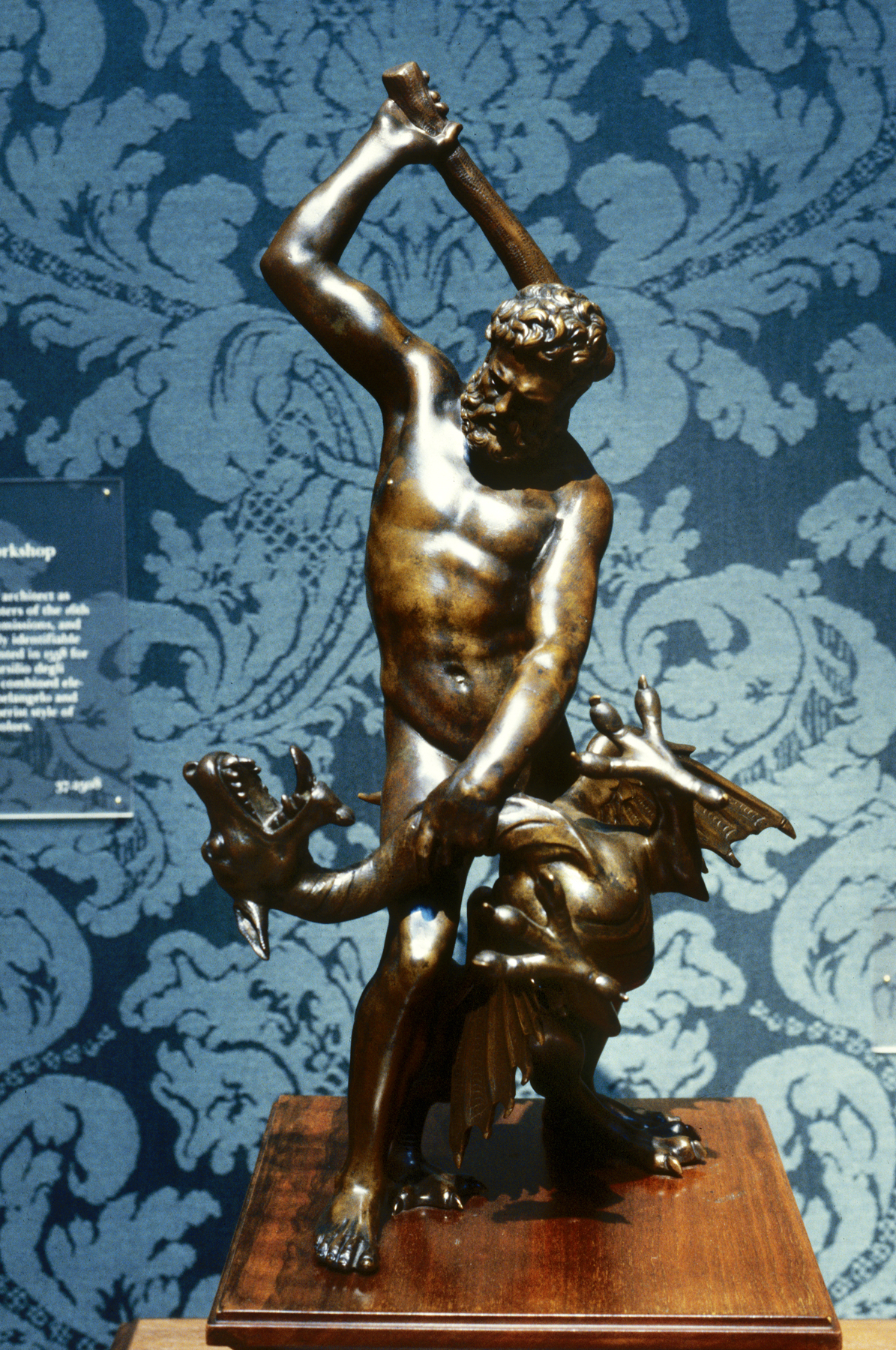
Hercules and the Dragon Ladon
These are the Dragons, which the ancient Poets have feigned did without sleeping keep and watch the Golden Apples of the Gardens of the Virgins Hesperides. — Nicolas Flamel, Exposition of the Hieroglyphical Figures (1399)
These are the Serpents and Dragons which the ancient Egyptians have painted in a Circle, the head biting the tail, to signify that they proceed from one and the same thing, and that it alone was sufficient, and that in the turning and circulation thereof it made itself perfect.
Giambologna, 16th century. Bronze. Hercules mid-swing, the dragon Ladon wrapped around his legs. The dragon’s mouth open, snarling. The hero’s torso twisted in a diagonal that makes the violence look like dancing.
Ladon never slept. That was his purpose — eternal wakefulness guarding the golden fruit. Hercules killed him, which in the mythological reading is heroism and in the alchemical reading is the necessary destruction of the guardian to access the prima materia.
Flamel said the two dragons are Sulphur and Mercury, “which being put together in the vessel of the Sepulchre, do bite one another cruelly… till both of them by their great poison and furious rage, killing one another, be stewed in their proper venom, which after their death, changeth them into living and permanent water.”
The guardian must die for the fruit to be taken. The dragons must kill each other for the water to live.